Tuesday, April 12, 2011

The Glass Books of the Dream Eaters - Gordon Dahlquist


It starts with a simple note. Roger Bascombe regretfully wishes to inform Celeste Temple that their engagement is forthwith terminated. Determined to find out why, Miss Temple takes the first step in a journey that will propel her into a dizzyingly seductive, utterly shocking world beyond her imagining – and set her on a collision course with a killer and a spy – in a bodice-ripping, action-packed roller coaster ride of suspense, betrayal and richly fevered dreams.


I learned, after getting about halfway through this double-volume monstrosity that the author of The Glass Books of the Dream Eaters was actually a playwright, and suddenly things became much clearer for me. There is a very interesting aspect to this novel, and that is the importance of movement – characters walk along hallways, cross each other without acknowledging it, climb up stairs, ride on trains and carriages, hide behind couches and peek through spy-holes in the walls… The list can go on. These are not the kinds of artifices one is used to seeing in books – but they are very common in the theatre, where entries and exits, and the spectator knowing something the character on scene does not (like the fact that there is someone hiding in the closet) adds to the tension, or creates comedy. At first, the slightly long-winded nature of the book had been slightly off-putting. But suddenly, with this new information, I had a whole new layer of literary delight to explore. And I could just picture all the near-misses, the chases through mysterious, winding corridors, the fighting, the posturing, and the mysteriously satisfying trail of death.

Yes, I say trail because even though there is a certain lightness to the author’s style as the plot progresses in its meandering, leisurely pace, the tale is nothing if not dark – evil alliances, mind-control, murder, rape and cold-blooded experimentation. The whole interspersed with sweet tea, warm scones and cute little green boots (you’ll have to read the book to understand this particular allusion!). It is a strange and violent universe that is created here – it is London in the 19th century, in the midst of the industrial revolution, but also a bizarre and slightly surreal place, where time seems to stand still, and anything is possible. This London that is not London is strangely compelling – it is extremely easy to get lost in the different streets and establishments, the different levels of society to which each place cater, the colourful inhabitants of each locale.

The third thing of note is the strength of the characters. We follow three main characters – Miss Celeste Temple, the young heiress to a plantation fortune, Cardinal Chang, a scholar cum assassin and Abelard Svenson, a doctor who works as a spy. They are strong, well-developed, and believable. I wish there had been more interaction between the three – they do not meet until the fourth chapter and are quickly separated again – but I can’t argue that they are not engaging. The set of villains is also impressive – the mad scientist about to destroy the world with his creation, the femme fatale, unafraid to use all the guns in her arsenal to achieve her goals (in this instance world domination), and a long list of lackeys who have been brainwashed into thinking this plan is the grandest thing that could possibly happen.

This is not an easy book, and there are some obvious flaws – it is too long, certainly, and we are always waiting for it to get to the point already, but in the end, when you actually find yourself in the midst of the final confrontation, you discover the waiting was not so bad, after all.


Ps: I don’t know who edited this book, but the cover art is simply wonderful – totally caught my eye in the bookstore, and actually made me buy the book. I’m a sucker for pretty things!

Sunday, April 3, 2011

Jonathan Strange and Mr. Norrell - Susanna Clarke

It's 1808 and that Corsican upstart Napoleon is battering the English army and navy. Enter Mr. Norrell, a fusty but ambitious scholar from the Yorkshire countryside and the first practical magician in hundreds of years. What better way to demonstrate his revival of British magic than to change the course of the Napoleonic wars? Mr. Norrell moves to London to establish his influence in government circles, devising such powerful illusions as an 11-day blockade of French ports by English ships fabricated from rainwater. But however skillful his magic, his vanity provides an Achilles heel, and the differing ambitions of his more glamorous apprentice, Jonathan Strange, threaten to topple all that Mr. Norrell has achieved. 


This book, by Susanna Clarke, was my travelling companion during a month-long jaunt through the Argentinean Patagonia. I was with a friend, and we got as far as Ushuaia, the southernmost city in the world. It was one of – if not the best – trips I ever took, complete with amazing animals and plants, hilarious adventures brought about mostly by our shortage of cash and hours spent on a bus through the most amazing landscapes.

It’s always strange how the circumstances surrounding the reading of a book end up colouring our view of it – I only have to glimpse at my copy of Jonathan Strange and Mr. Norrell to conjure up in my mind the empty planes, the amazing pinks and blues and greys that were so present in Patagonia. And I also believe the opposite is true – the magical atmosphere of this book, the strange plot, the bizarre world that is depicted, all of it contributed to my perceptions of the trip.

I do believe this book is above all a fantasy novel – its extremely well developed theories on magic (there are actually footnotes along the way, that reference an entire fictional corpus on the theory and history of English magic) as well as the dark and unsettling faery kingdom of Lost Hope – all of that is fantasy of the highest quality.

But there is also a second aspect to the novel, that falls neatly into the historical genre. A fictional history, during the Napoleonic wars, with battles, ministers and a society to accompany it. That might be one of the more original and appealing traits of the book, for me. Urban fiction– bringing magic to our everyday life – is common. But I do believe Susanna Clarke was one of the first to bring magic to our past – a fairy-tale like comedy of manners. I’ve since read other books that have a similar plan, but she was my first. I love that she tried to be precise and for the most part historically accurate in her renditions of Regency England and its accompanying society. The whole atmosphere of the novel, is a sort of jaunty wink to that period, with glimpses of gothic novels and romantic heroes aplenty. In fact, Jonathan Strange is quite the romantic character, with his tempestuous character and his devotion to his love(s).

But the central relationship in the novel is between the two practicing magicians, Mr Norell and Strange. It is a strained bond, that starts as a Master/Apprentice relationship, but devolves as the apprentice gains in popularity, and theoretic discussions and disagreements gain strength. The most important of those centres around the figure of the Raven King, a mythic being whose importance to English magic - or even its actual existence - is never agreed upon. The figure is quite mysterious, and the slightly metaphysical ending draws heavily on that basis – but I will say no more.

What I will say is that this is an original, very particular book. It is hard to categorise, and perhaps harder to be attached to than the more traditional staples of high fantasy. But it is also deeper than most common fantasy novels, and extremely well thought-out and written. I can’t recommend it enough.


Friday, April 1, 2011

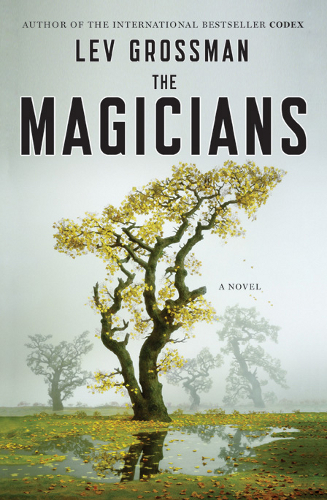
The Magicians - Lev Grossman


Like everyone else, precocious high school senior Quentin Coldwater assumes that magic isn't real, until he finds himself unexpectedly admitted to a very secretive and exclusive college of magic in upstate New York. There he indulges in the joys of college - friendship, love, sex, and booze - and receives a rigorous education in the craft of modern sorcery. Magic, though, doesn't bring Quentin the happiness and adventure he thought it would. After graduation, he and his friends stumble upon a secret that sets them on a remarkable journey, sure to finally fulfill Quentin's yearning. But their journey turns out to be darker and more dangerous than they'd imagined.


The Magicians is one of these books that leaves a hole in your life once you’re done – what a friend of mine used to call Post-Book Depression. It is a sort of adult Harry Potter, certainly, but only in a very minor way. There is none of the wonder and black-and-white morality of Harry Potter here. This is a gritty, shades-of-gray universe, where magic doesn’t change the basics of human nature, and the solution to all the world’s problems isn’t at the end of a wand.

The technical aspects of the novel are excellent – the writing is incisive, the characters well developed, the workings and system of magic well thought out and explained. But there is more to the book than just another urban fantasy novel – it is a coming of age, a realistic approach to what would happen if you let loose a bunch of troubled, over-achieving twenty somethings in a very original college, and endowed them all with magical powers. There is the usual love and lust, the loneliness that comes with that part of your life where you aren’t sure where you’re going and the world seems a difficult mess to unravel. There are mistakes and questionings, parties and heavy drinking, and through it all budding friendships and love shot through with sorrow and suffering.

I loved all the references to other literary sources – most obviously C.S. Lewis’ Narnia that is at the origin of Fillory, but also Rowling and LeGuin. But I loved even more that which is particular to this book, and that is clearly the character’s journey. I was simply amazed at how rich, complex, human, are the secondary characters, that seem to leap out of the page with fully formed personalities, flaws and secrets. Quentin takes a little longer to form, reacting to those around him, and the new world he was trust into – and it is through his eyes that we discover this new universe.

I picked this up thinking it was a normal fantasy book, but believe me, it is much, much more. If you haven’t yet, go find it. It isn’t to be missed. And , even though this book is complete on its own - there is an ending, and it is a good ending - a sequel is expected soon and I can’t wait to see where it leads.

Thursday, March 31, 2011

Warbreaker - Brandon Sanderson


To keep a treaty made long ago, the king of Idris must send his daughter to marry Susebron, the God King of Hallandren. Loath to part with his eldest daughter, Vivenna, King Dedelin instead sends his youngest daughter, tomboyish 17-year-old Siri, who struggles to make sense of the schemers and spies in Susebron's court. Hoping to rescue her sister, Vivenna joins a group of Idrian operatives with questionable motives. As Vivenna comes to terms with her magical abilities, resurrected hero Lightsong questions the role of the undead Returned Gods, who command Hallandren's mighty army of zombie soldiers.


Warbreaker was the first book by Brandon Sanderson that I read – before I tackled the mighty Mistborn trilogy (more on that later) or Elantris. I found it refreshingly original.

The world he creates is both bizarre and complex – a whole magical system based on colour, and two opposing kingdoms with vastly different views on just what that element represents and how it should be used. The plot is extremely convoluted, with many characters doing many different things, and never communicating with each other, so that things only get more complicated.

But through it all, there are a few recurring themes that give unity to the book – the difficult to grasp and even more difficult to fulfil concept of duty, the importance of familial obligation, respect of traditions, cultural tensions. At its hearth, this book is about opening your eyes to a wider world, and accepting that there are people who live with different sets of values.

The two leads are great characters – and strong women active in a complex and dangerous world. The most amazing transformation is in the character of Vivenna, who starts the book as a self-contained, self-assured – and ultimately self-centred – princess, bred to do her duty, who ends up escaping these chains and running away to an uncertain – and probably much more exiting – future. Hers is the more developed character, but I must admit to a certain fondness for light-hearted Siri, whose intrinsic joy and marvel at the world around her was simply a delight to read. She faces the worst challenges, and still sees the good in the world and the people around her.

And in the end, that is what I enjoyed the most about this book – even in the midst of tragedy (or more accurately, at its cusp) the dialogues are hilarious, the text has a sharp edge of dark humour, and the very world described is a continuous fĂȘte, the colours, the music, the art, hiding the deeper injustices of the world.

This is one of the things I love about Sanderson – he never falls back on the tried and true (wizards, elfs, goblins, etc.) but keeps us guessing and plays the reader against his own expectations. You never know what will happen next, or if you do, chances are you’re wrong. He also isn’t afraid to tackle difficult and potentially explosive subjects – and his take on the nature of religion is both interesting and imaginative, enough to invite reflection and discussion without being needlessly inflammatory.

This is the kind of book that doesn’t start with a bang, but slowly grows on you, so that by the last 50 or 60 pages, you’re up till tree in the morning to finish the story.

This is a great read for anyone who likes fantasy, particularly considering it is available for free at the author’s webpage – I’m posting a link for the final version here, but if you want to check the progression of the writing, there are numerous previous versions available as well as deleted scenes and comments by the author. Check it out!

Deborah Crombie's Duncan Kincaid/Gemma James Novels


I’ve set up this blog - mostly as a way to structure and plan comments on things I read and do - and then spent the next few days staring at it and wondering where to begin. Because the truth is, I read a lot. I gobble down books and stories like other people drink water, and if there were a support group for compulsive readers anonymous, I’d probably feel compelled to join.

In the end, I simply decided to look at my bookshelves, slowly make my way through them, and worry about organizing the site when there is actually something there to organize. I imagine I’ll need a category for books, probably divided into fantasy, crime, historical, romance and more serious literature, another for fanfiction, one for cinema and art. But for now, on to my first book review: Deborah Crombie’s Duncan Kincaid and Gemma James series.


There are 13 books in the series so far, started in the early 1990’s with A Share in Death. The author gives us more or less a book a year, as seems to be the norm with these crime series. Each book stands well on its own, with a death, investigation and unmasking of the culprit at the end – seems pretty straight forward, right?

And it is, as far as that goes. With the exception of one volume, A Finer End, all the books are classical examples of the British crime novel (no matter that they are written by an American author!). And even if that were all, I wouldn’t complain – they are well thought out, well written, and Deborah Crombie gets better with each book she writes. But there is more to the series than simple sleuthing, each story, each character, is well developed, his or her background explored, actions, reactions, everything is explained in detail.

There are many flashbacks in the series, and while reading they can sometimes be off-putting (since they break the rhythm of the book), but this shows the depth of the characters and the thought that went into their creation. This is the one aspect I am sometimes ambivalent about, but even while annoyed to have a cliffhanger prolonged while I muddle through a dozen pages of back-story, I can’t deny the fact that it is always information that enriches the plot.

And then there are our two detectives – and they are a delight. I loved the way their personal relationship developed together with the series, and how everything isn’t just sunshine and roses. Seeing them face those fictional challenges brings out their humanity, and is one more example of that care about character development I mentioned earlier. They are each complete individuals in their own right – very tridimensional, with strengths and weaknesses that can complement or strain the relationship. Gemma’s empathy, Duncan’s difficulties in always grasping this aspect of her personality, all of it adds to the reading experience.

One can’t help comparing this series with Elizabeth George’s Inspector Lynley (male/female detective couple, Scotland Yard, Murder investigations) – and I do believe they fall squarely in the same genre, even if the style of writing is completely different. I enjoy both series, even though I only just discovered George and I’ve been reading Crombie for years. They both have engaging central characters, but I think there might be a depth, or maybe a drama in Lynley that is not present in the other series. The themes that E.G. chooses for her novels are much darker, and the way she delves into the psyche of her characters reflects that – there is more suffering, more pain, more despair.

Deborah Crombie manages to infuse a certain lightness in every volume – whether in the description of acts of human kindness, or simply in the affection between her central characters and their imminently healthy family life.

So, highly recommended, a real pleasure to read! My favourite volume is, I think, Dreaming of the Bones, one of the more complex plots of the series, but I also loved Mourn not Your Dead, And Justice There is None, and more recently, Water Like a Stone.
 

Blog Template by YummyLolly.com