Wednesday, February 6, 2013

The King's Speech

Most people who know me, and tried to decide on a film to see with me on a given day, know that as I got older I started developing a strong aversion to anything that is overly dramatic and/or tragic. It might be childish of me (though I've decided to see it as a sign of intellectual maturity, so blame me if you dare) but I don't like coming away from a movie depressed and teary eyed. Before, I used to think that all really good movies had to involve tragedy (a belief steaming from the absolutely overwhelming number of bad endings in everything that is popularly considered high culture), but while I still appreciate conflict and tension, I no longer think a film (or a book for that matter) needs to end badly to be considered a masterpiece.

The King's Speech is one of these films that proves my point for me.


The cast for this movie is absolutely amazing, and they made one of the very best films I have seen in the last few years.


Tom Hooper..............................................Director

Colin Firth.................................................King George "Bertie" VI
Helena Bonham Carter..............................Duchess of York / Queen Elizabeth
Geoffrey Rush...........................................Lionel Logue
Derek Jacobi..............................................Archbishop Cosmo Langi
Jennifer Ehle..............................................Myrtle Logue
Timothy Spall............................................Winston Churchill
Guy Pearce................................................King Edward VIII
Michael Gambon.......................................King George V
Eve Best....................................................Wallis Simpson

This film is based on the story of King George VI, the current Queen' father, on the years surrounding his accession to the throne. It is an intimate portrayal of the royal family, centred on his struggles with his speech impediment, and the friendship he developed with Lionel Logue in his attempts to overcome it, as well as his reluctance to accept the responsibility of the crown which is finally trust upon him after his older brother abdicates in order to marry the woman he loves.


The acting in the film is absolutely phenomenal - there are no excesses, every actor plays vividly, but never garishly. Collin Firth, in particular, delivers a very moving performance, and the stutter of his character is present but never exaggerated, never turning ridiculous, which I greatly appreciate. 


I particularly loved Helena Bonham Carter as the Duchess of York - her first meeting with Lionel Logue is one of the funniest scenes I have ever had the pleasure of seeing. She is also amazing as the supporting and loving wife - often staying hopeful for her husband when he has all but given up. 

And one can not talk about this film without mentioning the amazing performance of Geoffrey Rush, who makes an amazing duo with Collin Firth. Their therapy sessions are great as moments of comic relief, and are the basis of a lifelong friendship.


Funny, intense, moving, profoundly human - this is one of those films that should not be missed.


I saw this film again for the Challenges over at Persephone's blog, and kind of hit the jackpot with this one as we have both Colin Firth and Michael Gambon for the Gentlemen, and Helena Bonham Carter for the Ladies.


My point tally is therefore:

- Gentlemen: 2 actors + 1 film = 3 points
- Ladies: 1 actress + 1 film = 2 points + 4 from before for a total 6 points at this time


Yay me!


Monday, February 4, 2013

Brave

I have been a fan of Pixar since their very first movie, Toy Story, came out in 1995. Indeed, much like Harry Potter, they were an integral part of my childhood and I believe the only films from them I haven't seen are Cars 1 and 2 (talking cars creep me out). 

As I grew older, I realized there was a reason for that - there was something special about Pixar movies that eluded the more traditional Disney animations: their stories were designed to please not only children, but adults as well. That is particularly visible in The Incredibles (2004), WALL-E (2008) and Up (2009) which have important plot points designed to speak to a mature audience. With that in mind, I didn't hesitate to go see Brave, their latest animation which won a Golden Globe for best animated feature film.


Brave follows the heroic journey of Merida, a skilled archer and headstrong daughter of King Fergus (voice of Billy Connolly) and Queen Elinor (voice of Emma Thompson). Determined to carve her own path in life, Merida defies an age-old custom sacred to the unruly and uproarious lords of the land: surly Lord Macintosh (voice of Craig Ferguson), massive Lord MacGuffin (voice of Kevin McKidd) and cantankerous Lord Dingwall (voice of Robbie Coltrane). Merida's actions inadvertently unleash chaos and fury in the kingdom, and when she turns to an eccentric Witch (voice of Julie Walters) for help, she is granted an ill-fated wish. The ensuing peril forces Merida to harness all of her skills and resources - including her clever and mischievous triplet brothers - to undo a beastly curse before it's too late, discovering the meaning of true bravery.

As always with Pixar, the animation was superbly done - the scottish highlands are beautifully drawn, and the characters are great (did you see Merida's hair? Isn't that just great?). The music as well is amazing (Mumford and Sons anyone?) and sets the tone for the story perfectly.

This was the first time Pixar ventured into the fairytale realm, and gave us a Disneylike princess. I wasn't very worried about that, being somewhat fond of the genre, but I was very glad that Brave was closer to Mulan than to Cinderella, with a strong leading female character, who isn't afraid to fight for what she wants.

The plot is a little more complex than we might be used to in an animation, and I've heard people who didn't enjoy the movie call it everything from "patchy" to "nonsensical" - and my response is that if you are unable to follow two or three different plotlines that come together in the end, you should try watching it again, in slow motion so you catch all the dialogue.

On the contrary, I thought that the film had surprising depth considering the audience it was intended to attract, as well as a lot of humour. It wasn't as original as Up or WALL-E, I agree, mostly because it draws very heavily from both the traditional stories of the young girl fighting an unwanted marriage and defying tradition, and the one of the girl warrior taking up arms in place of a man.

But despite all that, I absolutely loved it. Everything came together perfectly, and even if it isn't as groundbreaking as some of Pixar's previous works, it is a very pleasant movie, of the kind you can watch again and again without ever getting tired.

I watched this again for the Golden Ladies 2013 challenge, and so here are my current scores:
1 actress + 1 film = 2 point + 2 from before = 4 points 

A little snippet of what awaits you (check out the scottish accents, och!):


Saturday, February 2, 2013

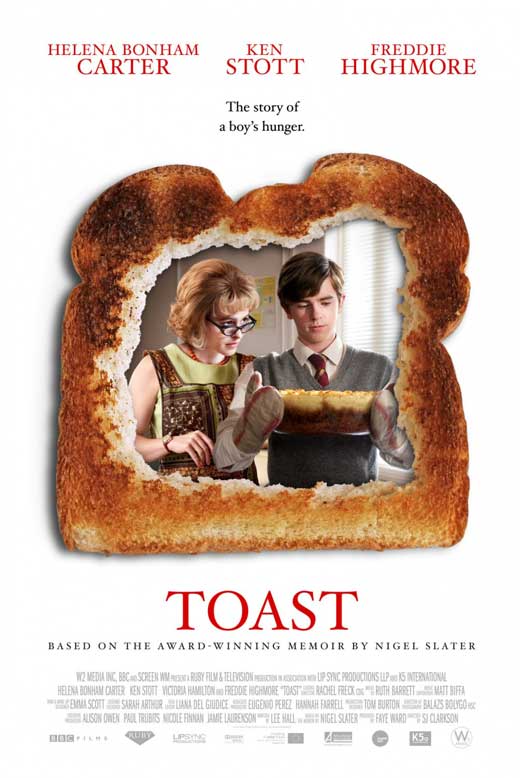
Toast


My good friend Gigi is running two challenges through her blog, Down the Rabbit Hole: Persephone and the Cheshire Cat, the 2013 Golden Ladies and Golden Gentlemen challenges. The rules are somewhat complicated (and available in her blog) but basically, one cumulates points by seeing movies, series or performances which feature one or more of the actors and actresses in a selected list – this year Colin Firth, Ian Mckellen, Gary Oldman and Michael Gambon for the guys and Emma Thompson, Helena Bonham Carte, Kate Winslet and Helen Mirren for the girls – and then writing a review of the work.

This seemed like a nice idea (especially since there are some amazing talents on that list) and a good way to force me to start writing again, after more than a whole year of silence. Besides, honestly, Collin Firth is irresistible and the rest is just icing on the cake.

My first stop – chosen at random from the list, and mostly because it had a strange title – was called Toast, featuring the amazing Helena Bonham Carter.


Director  .................................... S. J. Clarckson
Oscar Kennedy ......................... Young Nigel Slater
Freddie Highmore ................... Nigel Slater
Victoria Hamilton .................... Mrs. Slater
Ken Stott .................................. Mr. Slater
Helena Bonham Carter ........... Mrs. Potter
Matthew McNulty .................... Josh


When I went looking for the film, I discovered a few other appealing things about it. First, Lee Hall - the same person who gave us Billy Elliot - wrote it based on the memoir of the same name by Nigel Slater, and food plays an important part in the plot (I saw Julie and Julia recently, and it seemed fitting to stay on the same note).

Thus motivated, I went ahead and whiled away a few hours of a Saturday afternoon in front of my computer, and came away not exactly blown away, but by no means feeling as if it was a waste of time.

Indeed, the film has some of the same characteristic that made Billy Elliot such an amazing work: it is satirical and funny without demeaning the characters; it has drama and psychological depth without taking itself too seriously; it has conflict and an engaging plot, but doesn’t leave us reeling afterwards.

So far, so good, right? There is one major difference, however, and it is not in Toast’s favour: the main character in Billy Elliot is great – he is strong, and sensitive, and talented and despite all the hardships, he still loves and is loved by his family. Nigel Slater, in Toast, comes across as an annoying, spoilt, self-centred little twerp, who is incapable of taking other people’s feelings into consideration before doing anything. Very different levels of empathy towards the main character there, which have an impact on how touched the viewer is by the film.

All in all, Toast is a nice, light-hearted movie, with some very good acting (the boy who plays Nigel in the first part is particularly good, and Helena Bonham Carter is, as always, flawless even in the role of a very unsavoury character).

My point tally: 1 actress + 1 film = 2 points in the Golden Ladies Challenge.

Wednesday, May 4, 2011

The Lord Ramage Novels - Dudley Pope

I am fond of historical novels, particularly those concerning naval history and the Napoleonic wars. I mean, boats, winds, sailing. The search for honor and adventure in the midst of the blue sea – it appeals to my imagination.

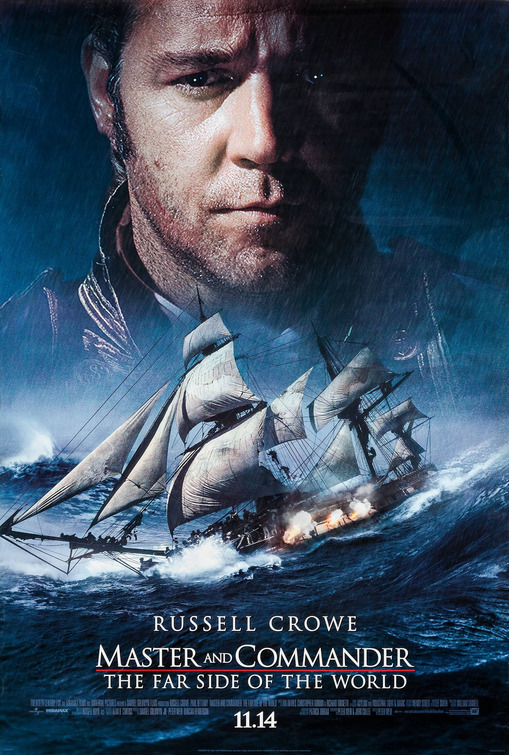
For me, it started with the film Master and Commander, and the more or less faithful account it gives of life in Nelson’s navy - it convinced me to try Patrick O’Brian and the Aubrey/Maturin series. Now, I’ve sailed a few times in my life, and know the difference between bow and stern, but O’Brian, in my opinion, loses the plot in the midst of the nautical details. So, I moved on to C. S. Forester and Horatio Hornblower – a nice enough series (and so very educational – I learned more than I ever thought to know about sailing a 19th century frigate) but the central character is too cold, too rational, to be entirely likable – so it was entertaining but left something to be desired.

It all came together, for me, with Dudley Pope’s 18 book series featuring Nicholas, Lord Ramage and his career from Lieutenant to captain of a Ship of the Line in the East Indies and the Mediterranean. It starts with Nicholas, still a lieutenant, being woken by the crew of a frigate under attack because he is the last surviving officer. From then on, action follows action – luck and skill playing equal parts in the plot. One interesting point (and originality of the series) is that Nicholas has to face, in addition to the enemy, various political plots in the Navy from his family’s enemies among the hierarchy. Indeed, his father, the Earl, was disgraced by these men, and Nicholas is constantly at risk, his every decision double and triple-checked. But he prevails against his enemies, as any hero worth his salt must, and emerges vindicated from it all, to fight and command another day.

Dudley Pope is a scholar – his descriptions of ships, rules, regulations, crews and ports are detailed and accurate (in fact, many of the actions described are based on real events), if sometimes a little long winded. But what I enjoyed the most, and what I think makes the biggest difference in the series, are the characters. Nicholas Ramage, certainly – the heir of the Earl of Blazey, who grew up in Tuscany and learned knife-throwing from a Neapolitan servant. At ease among lords, admirals and merchants or sharing a cell with his men. He is an interesting mix of intuition and wisdom and tactical genius, of aristocratic breeding and down to earth experience. The supporting character are also colourful and varied – Jackson, the American seaman serving in the British navy, Stafford, the cockney lock-pick who accompanies Nicholas in a dangerous spying mission and a number of others – my favourite is Sidney York, heir to a large merchant family and one of Nicholas closest friends. This care in populating the story with varied personalities from many origins and social classes is what made the difference for me – it made the story more human and more real than most naval histories. The fact that there are more details about the captain’s personal life doesn’t hurt, either – romantic entanglements, lost fiancĂ©es, damsels in distress. All is there, for our reading amusement.


Saturday, April 23, 2011

A Game Of Thrones - George R. R. Martin


In a land where summers can last decades and winters a lifetime, trouble is brewing. The cold is returning, and in the frozen wastes to the north of Winterfell, sinister and supernatural forces are massing beyond the kingdom's protective Wall. At the center of the conflict lie the Starks of Winterfell, a family as harsh and unyielding as the land they were born to. Sweeping from a land of brutal cold to a distant summertime kingdom of epicurean plenty, here is a tale of lords and ladies, soldiers and sorcerers, assassins and bastards, who come together in a time of grim omens. Amid plots and counterplots, tragedy and betrayal, victory and terror, the fate of the Starks, their allies, and their enemies hangs perilously in the balance, as each endeavors to win the deadliest of conflicts: the game of thrones.


Three days, 807 pages, and I finished A Game of Thrones. It’s been quite a ride – I can’t deny that George R. R. Martin is a brilliant storyteller. He grabbed me with the simple premise of his book – the struggle of an honorable family to survive in the midst of the pitfalls of political intrigue. I got hooked because of the new HBO series (for once I started with the film and then moved on to the book) and wasn’t disappointed. Either by the book, or the adaptation – I found the photography simply beautiful, the cast is very faithful to their descriptions in the book, and from what I could glean from online chatter, the writers plan to follow the plot very closely. I couldn’t be happier.


As for the book - the characters the author creates are very compelling. One can’t help falling in love with honorable Ned Stark, Robb and Bran, little Arya who is simply a joy, and Jon Snow (my favorite, I think). I took a strong dislike from the first to Catlyn Stark (probably because I love Jon so much and she treats him so very poorly, but also because she is the cause of much grief – some of her decisions are so very, very stupid) and some of the other character we follow aren’t so easy to empathize with (I could throttle Sansa with my bare hands), but they are all extremely human – struggling with fear and duty and having to grow up in the midst of a war. It’s brilliant character development, and very good writing.

Indeed, it’s amazing how Martin manages to communicate so much with so few words – Bran, when talking about his sister says “She lost her wolf.” And that wolf was so much more than a mere puppy: it’s that, but also symbolic of a proper respect for her origins, loyalty to family, duty and honor. Sansa, in her naĂŻve awe for the court and all its dazzling lights as well as a mindless adherence to courtly ways, ends up being the unwitting pawn for the destruction of a lot of good things. The author makes all that fit into just four words – and for us to immediately grasp what these four words mean, there is a whole lot of work involved in the creation of a universe and a code of behavior that we can understand and immerse ourselves in. By the time Sansa looses her way, the reader knows that the Dyrewolf is the symbol of House Stark, and most of all, we know what being a Stark means. When she stops acting like one, her wolf dies.

There is much tragedy and sadness in the book as well – what good fantasy series doesn’t? – and the consequence is that the villains are truly horrid. As the plot develops and more details of their characters are made clear, we end up absolutely hating them (I cannot say “I hope Jeoffrey dies a slow and painful death” enough times) – and yet also understanding their motives and behavior somehow, particularly when we see them through Tyrion’s eyes. He is a very interesting character – theoretically a villain, attached to his horrid family, and yet, despised and humiliated by them and more conscious of their shortcomings than anyone else. I can’t wait to see what will become of him!

As for the plot – it’s complex, but not convoluted – I guessed the great revelation about the royal children by page 200, and in the scene with Bran and Rykon in the crypt, I think I also guessed the great secret about Jon Snow’s birth that Eddard never got to tell him (since the answer was not in book one, I won’t know for sure until I finish reading the rest). So if you read carefully, the clues are all there, and you can glimpse how things will turn out. But there are so many parallel storylines, different geographical areas (have I mentioned how detailed is this universe? I love the different societies, different orders, different places) that one has to wonder how it will all come together. I have a few guesses, but since I am only a quarter of the way through what is published of the series, I guess I should carry on, and find out for sure.

So – taking a deep breath and diving into the next volume, A Clash of Kings.

And another clip, because the series is SO awesome:


Monday, April 18, 2011

The Chronicles of King Rolen's Kin - Rowena Cory Daniells


Only seven minutes younger than Rolencia’s heir, Byren has never hungered for the throne. He laughs when a seer predicts that he will kill his twin. But the royal heir resents Byren’s growing popularity. Across the land the untamed magic of the gods wells up out of the earth’s heart. It sends exotic creatures to stalk the wintry nights and it twists men’s minds, granting them terrible visions. Those so touched are sent to the Abbey to control their gift, or die. At King Rolen’s court, enemies plot to take the throne, even as secrets within his own household threaten to tear his family apart.


High Fantasy is a complicated genre – I find it incredibly appealing (all that magic, political intrigue, warriors, quests – it’s just about irresistible) but at the same time very easy to spoil. A little too much gore, a plot that is too complex to follow, too many characters to try to like, writing that starts to turn stale, and I might lose interest (I’ve had it happen with Robin Hobb and Terry Goodkind, for example).

My latest foray into the genre was with Rowena Cory Daniells’ The Chronicles of King Rolen’s Kin and it was not a disappointment. I had never heard about her before I saw the beautiful cover art in the bookstore (I find the second tome particularly pretty), and as a complete bookaholic, I had to have them.

The main story revolves around a battle for succession in the kingdom of Rolencia – it is a tale of political intrigue and complicated familial relations (a newly acknowledged bastard, some healthy sibling rivalry, a few dangerous secrets, and the scene is set). I love political mayhem and I found that the plot of this book had the perfect balance of complexity and just plain misinformation (innocent situations that turn into something else, to our despair as readers actively engaged in the fate of our favourite characters). This balance is the key to a plot that keeps us immersed in the story (I must have read the three tomes in four or five days) but never confuses the reader with too many fiddly details.

The universe where the action takes place is also very well developed – the author pays attention to small details that give it life in our eyes – my favourite was the favourite transportation method – skating the frozen canals during the winter (I found that so refreshingly original!). The system of magic – called Affinity here – is well construed, and well thought out – I loved all the ‘Affinity beasts’ that can cause problems but also be favoured companions and have an important role to play in the novels.

The magic is also the source of many of the problems in the world – not only because it attracts dangerous animals, but also because it is extremely restricted in its use – a person with affinity has two choices, either devote his or her life to the abbeys and learn to use it ‘for the greater good’ or risk death as a Renegade Practitioner. So there is not much freedom to chose, as the King rules with a heavy hand. The price one pays to live with secrets is an interesting leitmotiv in the series – particularly with Piro, the young princess who is actively trying to hide her powers. But with the other characters as well, in smaller measures, and this makes them vulnerable, but also extremely engaging.

The second volumes is basically a follow-up to the first – a continual building of tension that picks up after the near destruction of the kingdom and the escape or capture of most of the characters. The relief from tension arrives with the third volume, that resolves most of the previous volumes story-arcs, while also opening up to the rest of the universe imagined – particularly the rival kingdom of Merofynia, from whence most of the villains come.

As for the denouement – I am almost afraid to say. My reaction was something like: “What??? No, no, no, no, no, no – I want mooooooore!!! There has to be mooooore!!! Where is the fourth volume???”

Because the truth is, while much has been resolved (most of the political intrigue, for example, is completely settled), much is also left in suspense – particularly relating to personal relationships and romantic entanglements, but also the reclaiming of a whole occupied kingdom. I found the ending abrupt – there really is no other word. It does not take away from all that came before – it is a very good series – but it is the major problem in my opinion: I don’t much like to be left hanging after becoming so very enmeshed in a story. So I certainly recommend the books – but beware the sudden fall that comes right after the end of the action. No awkward epilogues here!

Addendum: I was very happy to learn that there will be three more books, sometime in the distant, distant future. Apparently the author has one more trilogy planned, but wants to finish a new series she is working on before tackling the project.

Sunday, April 17, 2011

The Adjustment Bureau


Do we control our destiny, or do unseen forces manipulate us? Matt Damon stars in the thriller The Adjustment Bureau as a man who glimpses the future Fate has planned for him and realizes he wants something else. To get it, he must pursue the only woman he's ever loved across, under and through the streets of modern-day New York. On the brink of winning a seat in the U.S. Senate, ambitious politician David Norris (Damon) meets beautiful contemporary ballet dancer Elise Sellas (Emily Blunt)-a woman like none he's ever known. But just as he realizes he's falling for her, mysterious men conspire to keep the two apart. David learns he is up against the agents of Fate itself-the men of The Adjustment Bureau-who will do everything in their considerable power to prevent David and Elise from being together. In the face of overwhelming odds, he must either let her go and accept a predetermined path...or risk everything to defy Fate and be with her.


Director...............................George Nolfi
Matt Damon........................David Norris
Emily Blunt.........................Elise Sellas
John Slattery.......................Richardson
Anthony Mackie.................Henry Mitchell
Michael Kelly......................Charlie Traynor

    I enjoy going to the movies, so when my friends invite me, I don’t usually bother to check what we are going to see. This has led me astray a few times, but I’m not a difficult customer – and I have reasonable friends – so mostly, I can’t complain. My last experience was with The Adjustment Bureau, a delightful little gem. They translated the title here in France as L’Agence, so, when I was told we were going to see a film called The Agency I was more or less certain I would be enjoying two hours of secret agents, foreign operatives, and everything else you can expect from a spy thriller. I could not possibly have been more wrong!

    The Adjustment Bureau is adapted from a short story by Philip K. Dick, published in 1954 as The Adjustment Team. It's not the first movie to have originated from the mind of this author – Blade Runner and Minority Report are only two of the most well known. In this instance, the story was transformed into a modern day dark comedy that touches upon such hefty subjects as fate, free will, and the active presence of a divine force interfering in the day to day running of our lives.

    The film centers on the life of David Norris, an up and coming politician, who is obviously meant for more than the seat in the Senate he is going for – young, a self-made man from a difficult background, confident but also conflicted by what his role is supposed to be - he is everything a voter could hope for in a candidate. Enter Elise, wild, free, a contemporary Ballet dancer. It’s love at first sight. Except, that love is apparently not part of The Plan. So, exit the happily ever after and enter The Adjustment Team, to correct all deviations and put History back on track.

    I appreciated the light feel of the film – it could easily have become maudlin or overly emotional – the hero’s fight against an unforgiving destiny is a dramatic ploy we see often enough. But here there is laughter, and there is style – I simply adored the jaunty little hats on all the operatives of the Bureau. The fantastic elements are also incredibly appropriate – note, the doors. How I love the endless possibilities of analysis and interpretations that little piece of imagery allows – and very well integrated to the reality of the movie.

    I am not saying this is a very serious movie – I don’t think that is the purpose at all. But it is believable. It is interesting. It is funny and thrilling. What more can you wish for when you sit down to the dark delights of the cinema?

    Tuesday, April 12, 2011

    The Glass Books of the Dream Eaters - Gordon Dahlquist


    It starts with a simple note. Roger Bascombe regretfully wishes to inform Celeste Temple that their engagement is forthwith terminated. Determined to find out why, Miss Temple takes the first step in a journey that will propel her into a dizzyingly seductive, utterly shocking world beyond her imagining – and set her on a collision course with a killer and a spy – in a bodice-ripping, action-packed roller coaster ride of suspense, betrayal and richly fevered dreams.


    I learned, after getting about halfway through this double-volume monstrosity that the author of The Glass Books of the Dream Eaters was actually a playwright, and suddenly things became much clearer for me. There is a very interesting aspect to this novel, and that is the importance of movement – characters walk along hallways, cross each other without acknowledging it, climb up stairs, ride on trains and carriages, hide behind couches and peek through spy-holes in the walls… The list can go on. These are not the kinds of artifices one is used to seeing in books – but they are very common in the theatre, where entries and exits, and the spectator knowing something the character on scene does not (like the fact that there is someone hiding in the closet) adds to the tension, or creates comedy. At first, the slightly long-winded nature of the book had been slightly off-putting. But suddenly, with this new information, I had a whole new layer of literary delight to explore. And I could just picture all the near-misses, the chases through mysterious, winding corridors, the fighting, the posturing, and the mysteriously satisfying trail of death.

    Yes, I say trail because even though there is a certain lightness to the author’s style as the plot progresses in its meandering, leisurely pace, the tale is nothing if not dark – evil alliances, mind-control, murder, rape and cold-blooded experimentation. The whole interspersed with sweet tea, warm scones and cute little green boots (you’ll have to read the book to understand this particular allusion!). It is a strange and violent universe that is created here – it is London in the 19th century, in the midst of the industrial revolution, but also a bizarre and slightly surreal place, where time seems to stand still, and anything is possible. This London that is not London is strangely compelling – it is extremely easy to get lost in the different streets and establishments, the different levels of society to which each place cater, the colourful inhabitants of each locale.

    The third thing of note is the strength of the characters. We follow three main characters – Miss Celeste Temple, the young heiress to a plantation fortune, Cardinal Chang, a scholar cum assassin and Abelard Svenson, a doctor who works as a spy. They are strong, well-developed, and believable. I wish there had been more interaction between the three – they do not meet until the fourth chapter and are quickly separated again – but I can’t argue that they are not engaging. The set of villains is also impressive – the mad scientist about to destroy the world with his creation, the femme fatale, unafraid to use all the guns in her arsenal to achieve her goals (in this instance world domination), and a long list of lackeys who have been brainwashed into thinking this plan is the grandest thing that could possibly happen.

    This is not an easy book, and there are some obvious flaws – it is too long, certainly, and we are always waiting for it to get to the point already, but in the end, when you actually find yourself in the midst of the final confrontation, you discover the waiting was not so bad, after all.


    Ps: I don’t know who edited this book, but the cover art is simply wonderful – totally caught my eye in the bookstore, and actually made me buy the book. I’m a sucker for pretty things!

    Sunday, April 3, 2011

    Jonathan Strange and Mr. Norrell - Susanna Clarke

    It's 1808 and that Corsican upstart Napoleon is battering the English army and navy. Enter Mr. Norrell, a fusty but ambitious scholar from the Yorkshire countryside and the first practical magician in hundreds of years. What better way to demonstrate his revival of British magic than to change the course of the Napoleonic wars? Mr. Norrell moves to London to establish his influence in government circles, devising such powerful illusions as an 11-day blockade of French ports by English ships fabricated from rainwater. But however skillful his magic, his vanity provides an Achilles heel, and the differing ambitions of his more glamorous apprentice, Jonathan Strange, threaten to topple all that Mr. Norrell has achieved. 


    This book, by Susanna Clarke, was my travelling companion during a month-long jaunt through the Argentinean Patagonia. I was with a friend, and we got as far as Ushuaia, the southernmost city in the world. It was one of – if not the best – trips I ever took, complete with amazing animals and plants, hilarious adventures brought about mostly by our shortage of cash and hours spent on a bus through the most amazing landscapes.

    It’s always strange how the circumstances surrounding the reading of a book end up colouring our view of it – I only have to glimpse at my copy of Jonathan Strange and Mr. Norrell to conjure up in my mind the empty planes, the amazing pinks and blues and greys that were so present in Patagonia. And I also believe the opposite is true – the magical atmosphere of this book, the strange plot, the bizarre world that is depicted, all of it contributed to my perceptions of the trip.

    I do believe this book is above all a fantasy novel – its extremely well developed theories on magic (there are actually footnotes along the way, that reference an entire fictional corpus on the theory and history of English magic) as well as the dark and unsettling faery kingdom of Lost Hope – all of that is fantasy of the highest quality.

    But there is also a second aspect to the novel, that falls neatly into the historical genre. A fictional history, during the Napoleonic wars, with battles, ministers and a society to accompany it. That might be one of the more original and appealing traits of the book, for me. Urban fiction– bringing magic to our everyday life – is common. But I do believe Susanna Clarke was one of the first to bring magic to our past – a fairy-tale like comedy of manners. I’ve since read other books that have a similar plan, but she was my first. I love that she tried to be precise and for the most part historically accurate in her renditions of Regency England and its accompanying society. The whole atmosphere of the novel, is a sort of jaunty wink to that period, with glimpses of gothic novels and romantic heroes aplenty. In fact, Jonathan Strange is quite the romantic character, with his tempestuous character and his devotion to his love(s).

    But the central relationship in the novel is between the two practicing magicians, Mr Norell and Strange. It is a strained bond, that starts as a Master/Apprentice relationship, but devolves as the apprentice gains in popularity, and theoretic discussions and disagreements gain strength. The most important of those centres around the figure of the Raven King, a mythic being whose importance to English magic - or even its actual existence - is never agreed upon. The figure is quite mysterious, and the slightly metaphysical ending draws heavily on that basis – but I will say no more.

    What I will say is that this is an original, very particular book. It is hard to categorise, and perhaps harder to be attached to than the more traditional staples of high fantasy. But it is also deeper than most common fantasy novels, and extremely well thought-out and written. I can’t recommend it enough.


    Friday, April 1, 2011

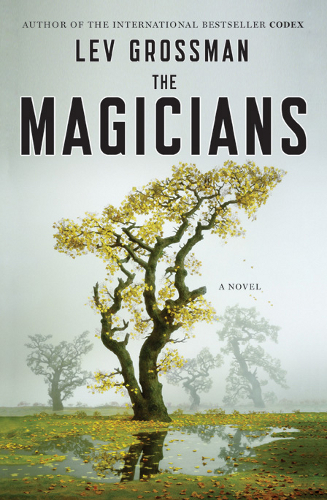
    The Magicians - Lev Grossman


    Like everyone else, precocious high school senior Quentin Coldwater assumes that magic isn't real, until he finds himself unexpectedly admitted to a very secretive and exclusive college of magic in upstate New York. There he indulges in the joys of college - friendship, love, sex, and booze - and receives a rigorous education in the craft of modern sorcery. Magic, though, doesn't bring Quentin the happiness and adventure he thought it would. After graduation, he and his friends stumble upon a secret that sets them on a remarkable journey, sure to finally fulfill Quentin's yearning. But their journey turns out to be darker and more dangerous than they'd imagined.


    The Magicians is one of these books that leaves a hole in your life once you’re done – what a friend of mine used to call Post-Book Depression. It is a sort of adult Harry Potter, certainly, but only in a very minor way. There is none of the wonder and black-and-white morality of Harry Potter here. This is a gritty, shades-of-gray universe, where magic doesn’t change the basics of human nature, and the solution to all the world’s problems isn’t at the end of a wand.

    The technical aspects of the novel are excellent – the writing is incisive, the characters well developed, the workings and system of magic well thought out and explained. But there is more to the book than just another urban fantasy novel – it is a coming of age, a realistic approach to what would happen if you let loose a bunch of troubled, over-achieving twenty somethings in a very original college, and endowed them all with magical powers. There is the usual love and lust, the loneliness that comes with that part of your life where you aren’t sure where you’re going and the world seems a difficult mess to unravel. There are mistakes and questionings, parties and heavy drinking, and through it all budding friendships and love shot through with sorrow and suffering.

    I loved all the references to other literary sources – most obviously C.S. Lewis’ Narnia that is at the origin of Fillory, but also Rowling and LeGuin. But I loved even more that which is particular to this book, and that is clearly the character’s journey. I was simply amazed at how rich, complex, human, are the secondary characters, that seem to leap out of the page with fully formed personalities, flaws and secrets. Quentin takes a little longer to form, reacting to those around him, and the new world he was trust into – and it is through his eyes that we discover this new universe.

    I picked this up thinking it was a normal fantasy book, but believe me, it is much, much more. If you haven’t yet, go find it. It isn’t to be missed. And , even though this book is complete on its own - there is an ending, and it is a good ending - a sequel is expected soon and I can’t wait to see where it leads.
     

    Blog Template by YummyLolly.com